(CINEMA) Magellan, the portrait of a Filipino filmmaker
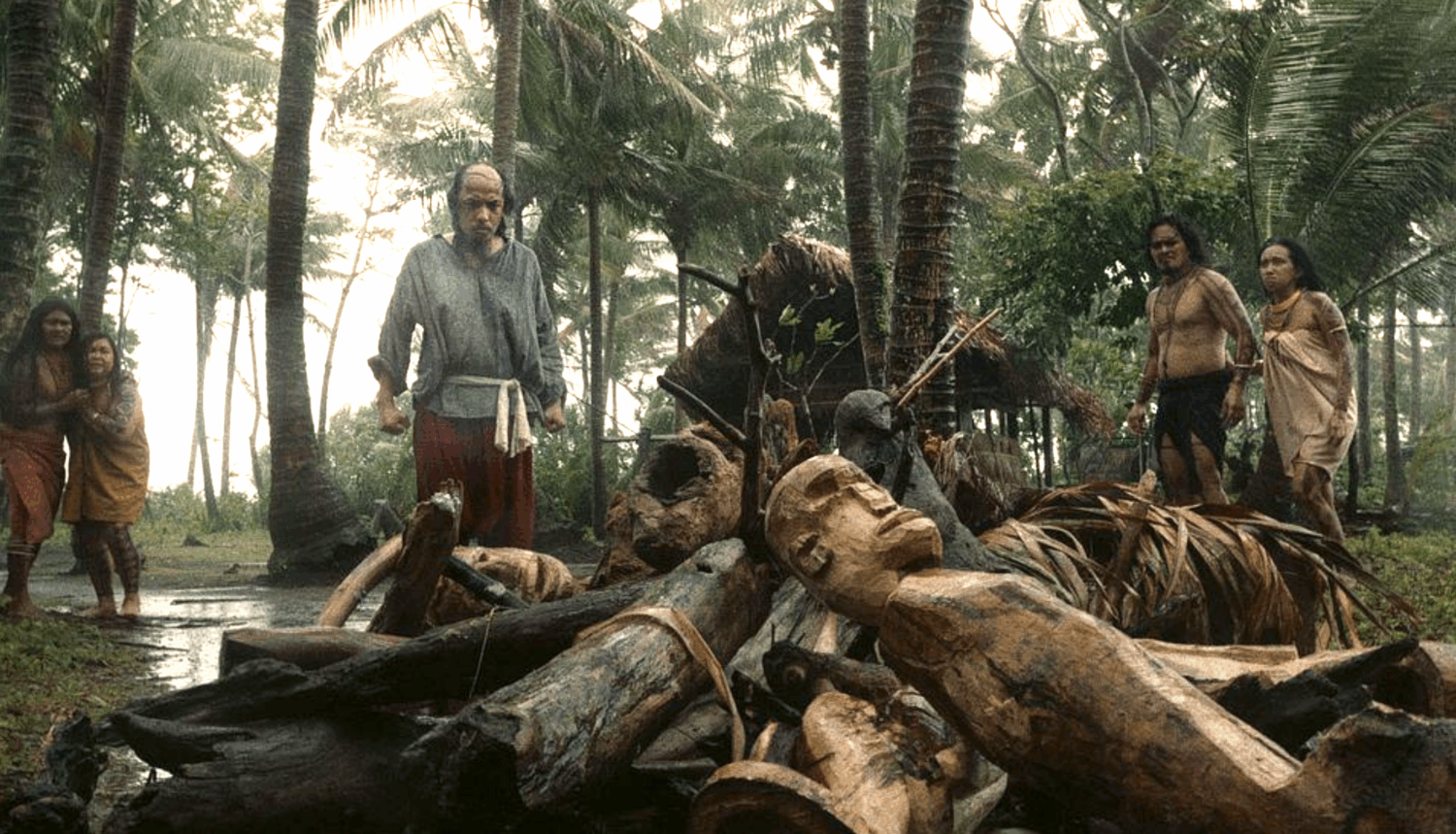
We have understood for a while that the time has come for the “deconstruction” of the myths and great figures of European history. This is as true in National Education as in cultural circles. More worrying, perhaps, is this propensity that we have, in the West, to finance repentant films made by those who hate us in order to further undermine us and then demand reparation. This is the case with the new biographical film on Magellan, largely produced by Spain and Portugal. Directed by the Filipino Lav Diaz, this boring feature film made with your feet reduces the mission of the greatest European traveler of the 16the century to its pitiful end in the Southeast Asian archipelago, when the warriors of the king of Mactan, Lapu-Lapu, curbed his evangelizing ambitions and killed him.
Magellan says absolutely nothing, in truth, neither of the character, nor of the era which forged him, nor even of the symbolic significance of his journey on the scale of History (the true beginnings of globalization, neither more nor less). So that the spectator will leave the room, after 2 hours 43 minutes, without having learned anything on the subject…
The first world tour in history by sea
A Portuguese navigator who felt financially wronged by the King of Portugal, Fernand de Magellan offered his services in 1518 to the young Charles V, King of Spain and future Holy Roman Emperor, promising him access to the Moluccas, an Indonesian archipelago known for its spices, and particularly for cloves.
In a context where Portugal and Spain had shared the globe along a vertical line, via the Treaty of Tordesillas in 1494, Magellan made the (erroneous) bet that the Moluccas were on the Spanish side of the antimeridian, thus promising Charles V immeasurable riches.
The latter then entrusted him with five boats loaded with food. With a crew of 236 men, Magellan ventured across the oceans. The idea was to cross the Atlantic, go along Brazil to the south of the American continent (the future “Cape of Magellan”), go up north via the Chilean coast and turn towards the Pacific Ocean to the famous “spice islands” of Indonesia.
During this journey planned for two years, Magellan experienced real hell: first a mutiny in 1520 (concerning three ships out of five), then the sinking of the Santiagodesertion of the ship Saint Anthony (the most loaded with provisions), the appearance of hunger, scurvy and rats, the lack of drinking water and a slew of deaths…
A lazy film, neither made nor to be made
Lav Diaz’s film says almost none of this. Filmed in 1.33:1 aspect ratio, with desperately static (sooporific?) filming – the height of it, for a travel story – and direction of actors close to bad subsidized theater, Magellan never takes the historical measure of this expedition, is content to portray to us an inhuman navigator with his men, while he simply applied the harsh disciplinary laws of his time, and bloodthirsty with the natives. A somewhat radical vision that needs to be qualified to the extent that Magellan was praised by historians for having forbidden his crews, from the bay of Rio de Janeiro, abuse of local populations under penalty of death…
Poor from a historical point of view, the film does not even take the trouble to analyze the Philippine episode with regard to the overall failure of the initial mission. Historians agree, in fact, to see this disastrous messianic outlet as a real headlong rush at a time when the navigator understands that the spice islands will never be Spanish but under Portuguese control.
In short, this Lav Diaz film is absolutely uninteresting; we instead recommend to our readers Magellan’s Incredible Journeythe exciting documentary series produced by François de Riberolles for untilor the immersive exhibition at the National Maritime Museum: Magellana journey that changed the world.
1 star out of 5
 Print, save as PDF this article













Post Comment